Tomoaki Yamaguchi Translating Crop Production Science.

Research themes

01

About

Tomoaki Yamaguchi

Tomoaki Yamaguchi

山口 友亮

Assistant Professor, Faculty of Applied Biological Sciences, Gifu University

Translating crop science
through remote sensing and AI,
and delivering it to farmers.

Rice / Remote sensing / AI / Knowledge translation

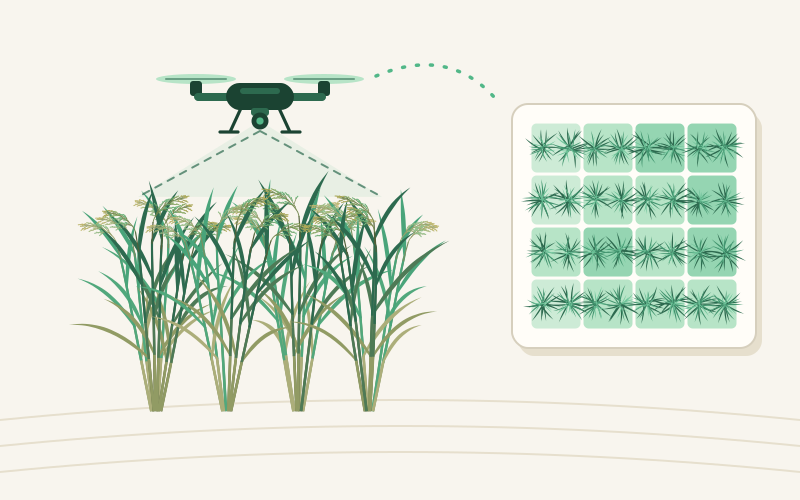
Thank you for visiting. Too many findings in crop science stay locked inside papers and never reach the farmers who could use them. Working with drones, spectral sensors, and machine learning (including explainable AI, or XAI), we build crop growth monitoring systems and yield prediction models for rice and other crops. Our aim is to translate that knowledge into forms farmers can actually use. To bring the results of complex analyses out into the field, we connect research and practice in several ways, from large language models (LLMs) to free web apps that anyone can use.

Career & Education

  • Since 2024
    Assistant Professor Faculty of Applied Biological Sciences, Gifu University
  • 2024.2
    Visiting Researcher Leibniz Centre for Agricultural Landscape Research (ZALF), Germany
  • 2022–24
    Research Fellow DC2 Japan Society for the Promotion of Science (JSPS)
  • 2021–24
    Ph.D. in Agriculture Tokyo University of Agriculture and Technology
  • 2019–21
    M.S. in Agriculture Tokyo University of Agriculture and Technology
  • 2015–19
    B.S. in Agriculture Tokyo University of Agriculture and Technology

What motivates my research

Helping to sustain local food cultures

I have visited countries in Africa and Southeast Asia and come to know a wide range of food cultures. In the international lab where I spent six years as a student, I also had many chances to taste dishes that students from abroad brought to share. I am often surprised by the flavors people love in each place. Over the years, I have come to see how much the foods people want to keep eating vary from region to region.
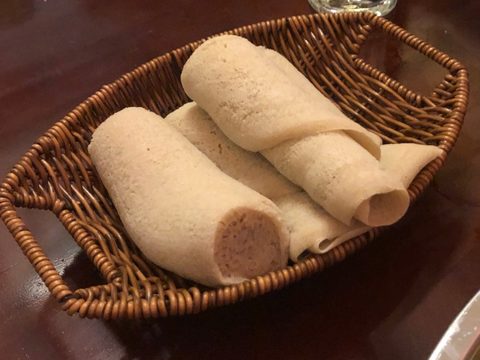
  • Rolled injera in a basket
    EthiopiaInjeraHad this at an Ethiopian restaurant in Cambodia. Extremely sour. Hard to believe it's a staple.
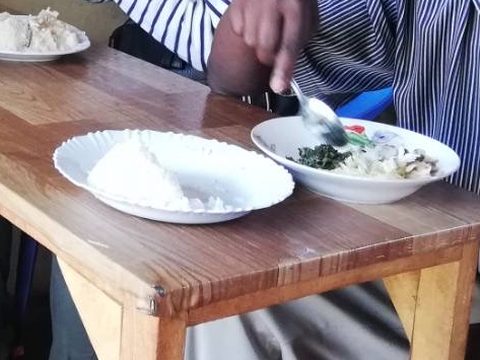
  • Ugali on a plate, with a bowl of sukuma wiki (cooked greens)
    KenyaUgali and sukuma wikiHeavy. Hard to swallow. I was told young people, as you might expect, are coming to prefer rice.
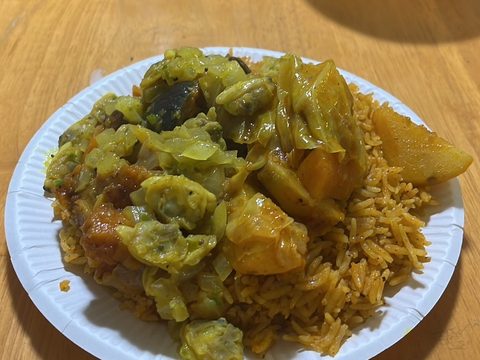
  • Jollof rice topped with vegetable stew
    GhanaJollof riceA student from Ghana often ate this. Delicious.
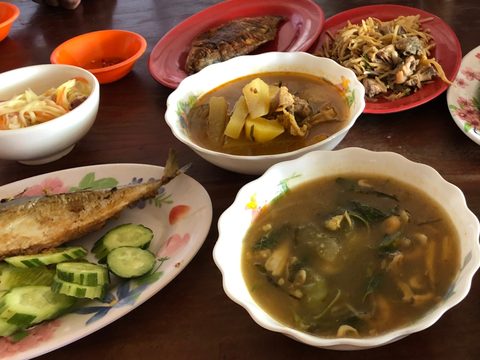
  • Fish dishes and soups on a table
    CambodiaFish and soupsSour meets sweet meets bitter meets spicy. All jumbled together.
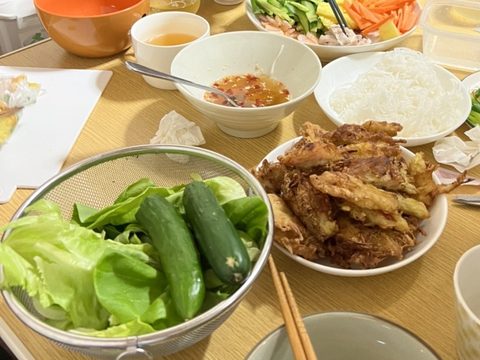
  • Fillings for fresh spring rolls on a table
    VietnamFresh spring rollsA student from Vietnam organized a get-together where we rolled our own with the fillings we liked. Fun. Light. Delicious.
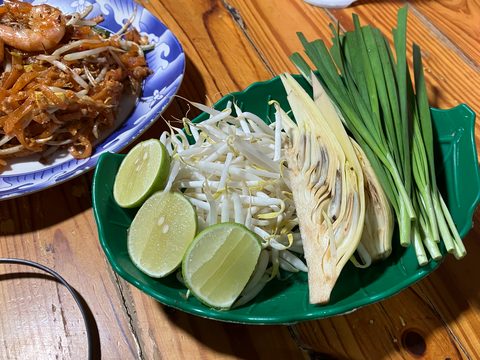
  • Pad thai with shrimp, served with bean sprouts, garlic chives, banana blossom, and lime
    ThailandPad thaiSpicy, but so good. In Thailand, street stalls sell all kinds of food, even in the morning. Most of it is spicy, which hurts a little.
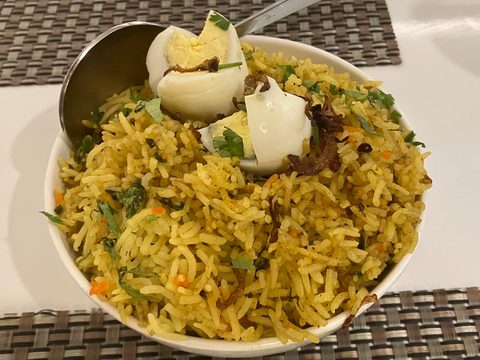
  • Biryani topped with boiled eggs
    IndiaBiryaniSo good. In India, everything tastes like curry, not just biryani. People there eat with their right hand. That's because the left hand is considered unclean, but a local professor told me it's to be fully involved in eating.
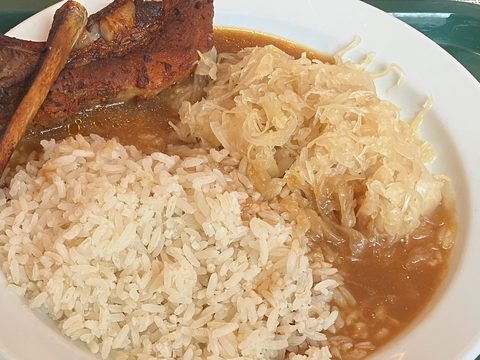
  • A cafeteria plate of rice, meat on the bone, and sauerkraut
    GermanySauerkrautIt refreshes the palate, so it's good to have around.

The local people I met were all attached to their own food. That is why I want to raise productivity in a way that builds on the food culture of each country and region.

Crop scienceInformaticsCulturalanthropology
02

Methods

03

Resources

04

Publications

2026 Field Crops Research

Understanding rice yield gaps with crop modeling and machine learning in a long-term continuous cropping experiment

Yamaguchi T., et al.

Quantified rice yield gaps (the difference between actual and achievable yield) and identified their underlying drivers, using data from a long-term continuous cropping experiment.
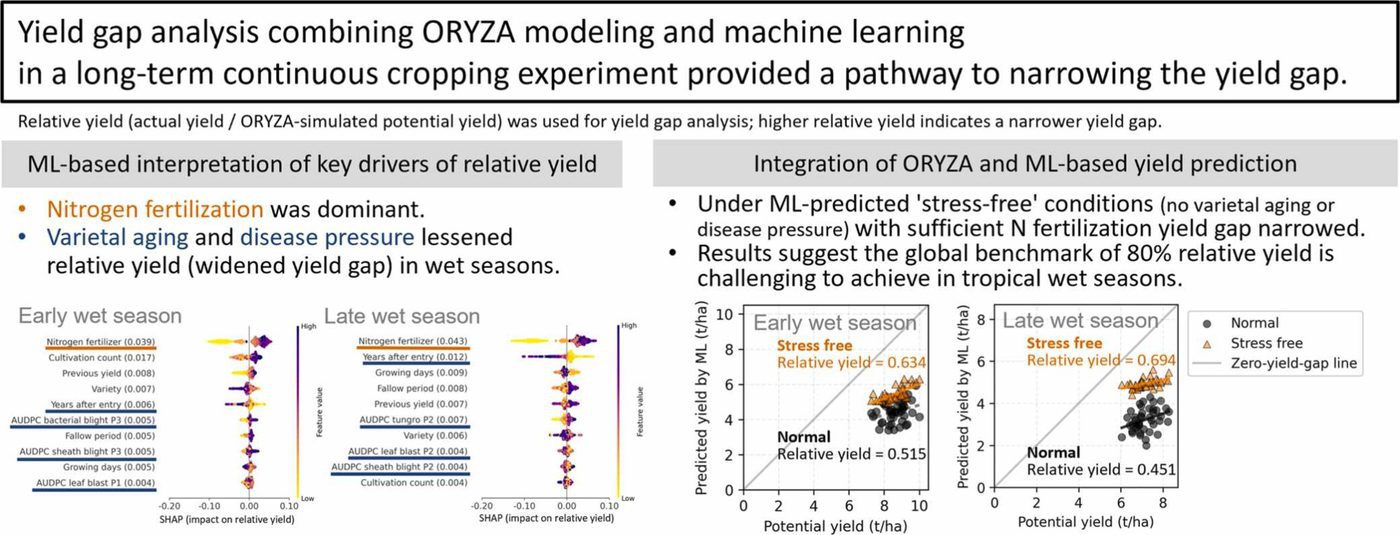
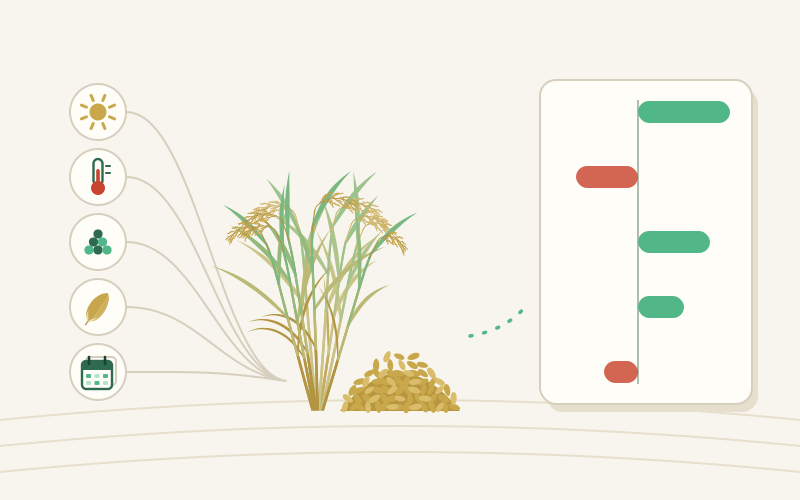
Summary figure of the yield gap drivers and how to narrow the gap
Graphical abstract from Yamaguchi et al. (2026), CC BY 4.0
2025 arXiv (preprint)

Agentic Explainable Artificial Intelligence (Agentic XAI) Approach To Explore Better Explanation: A Case Study in Decision Support for Rice Cultivation in Japan

Yamaguchi T., et al.

Proposed agentic XAI, in which an AI agent repeatedly rewrites farm guidance based on explainable AI results. Scores from crop scientists and LLMs showed that quality peaks after a few rounds.
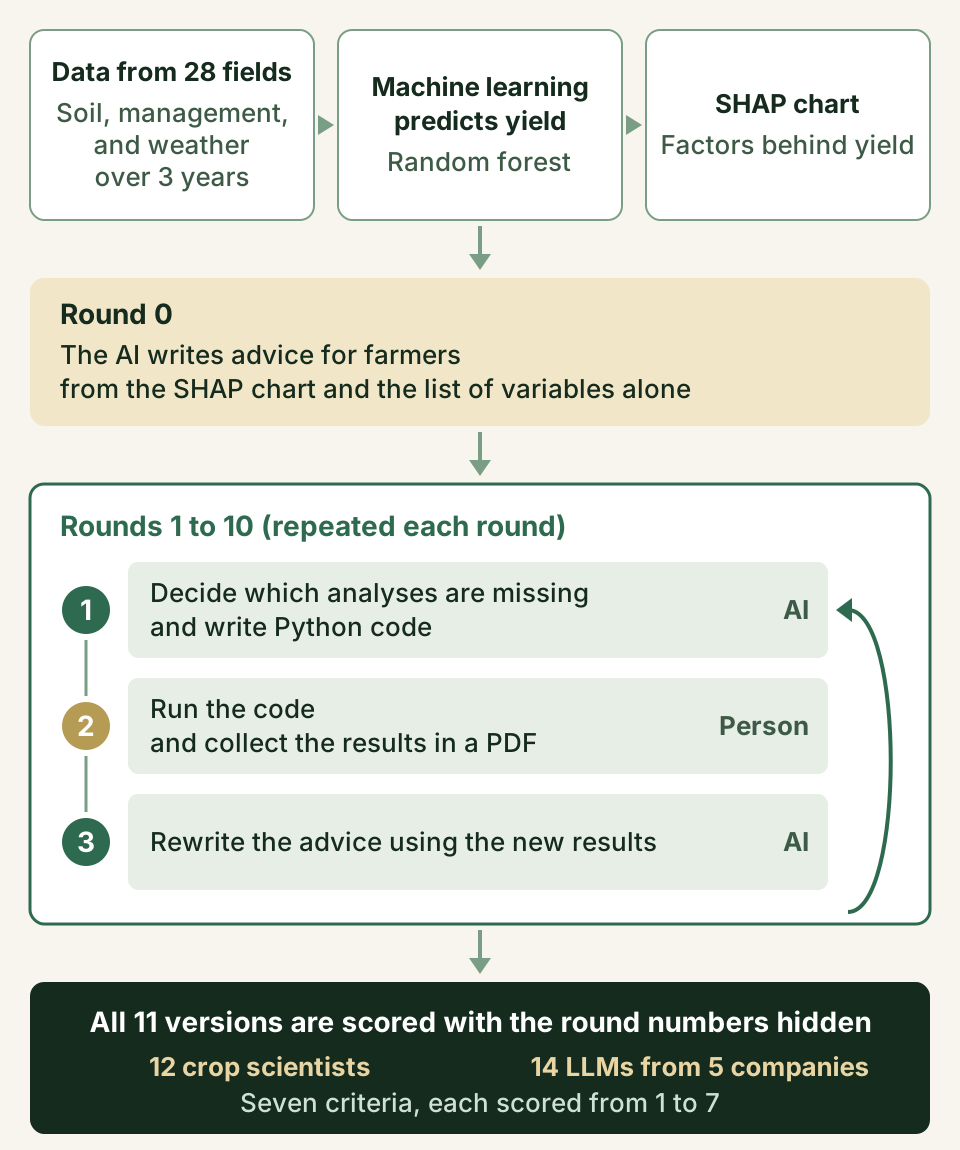
Flow of the study, from field data and a SHAP chart to advice written by the AI, ten rounds of analysis and rewriting, and scoring by crop scientists and LLMs
How agentic XAI works
2025 Field Crops Research

Machine learning reveals drivers of yield sustainability in five decades of continuous rice cropping

Yamaguchi T., et al.

Used explainable AI to reveal what sustains rice yield across five decades of continuous cropping.
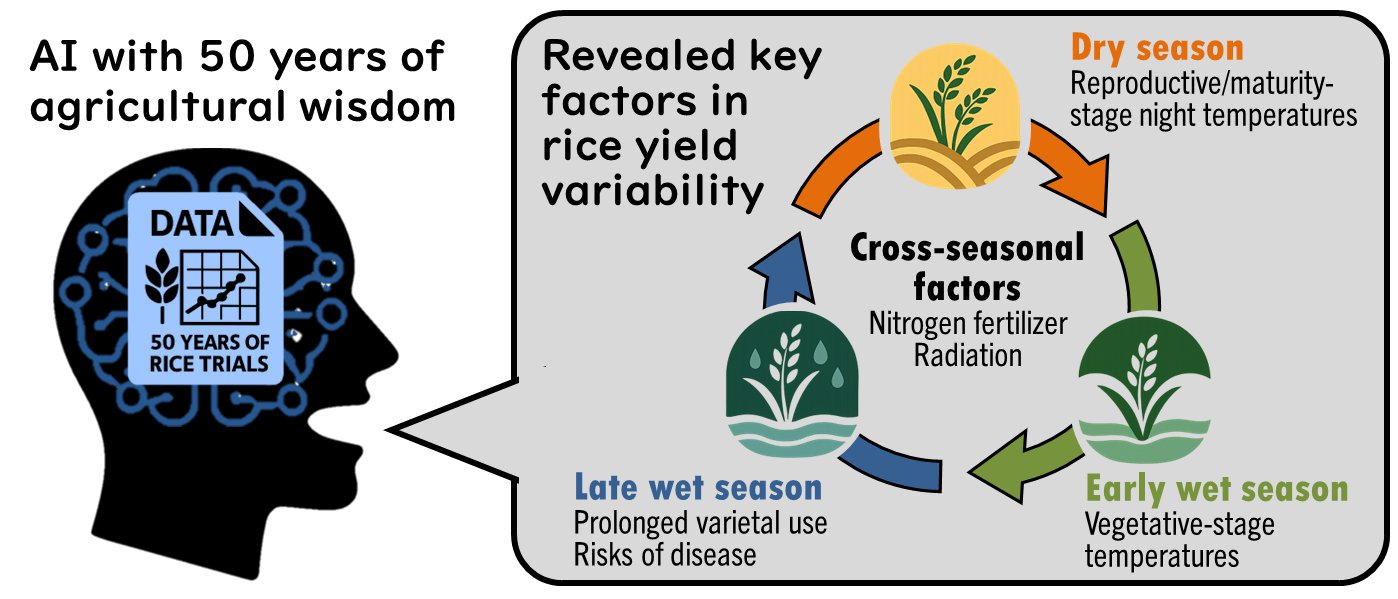
Figure showing how AI used 50 years of rice trial data to find what drives yield in each season
Graphical abstract from Yamaguchi et al. (2025)
2025 European Journal of Agronomy

A study on optimal input images for rice yield prediction models using CNN with UAV imagery and its reasoning using explainable AI

Yamaguchi T., et al.

Identified optimal drone image inputs for CNN-based rice yield prediction and used explainable AI to show where the model focused.
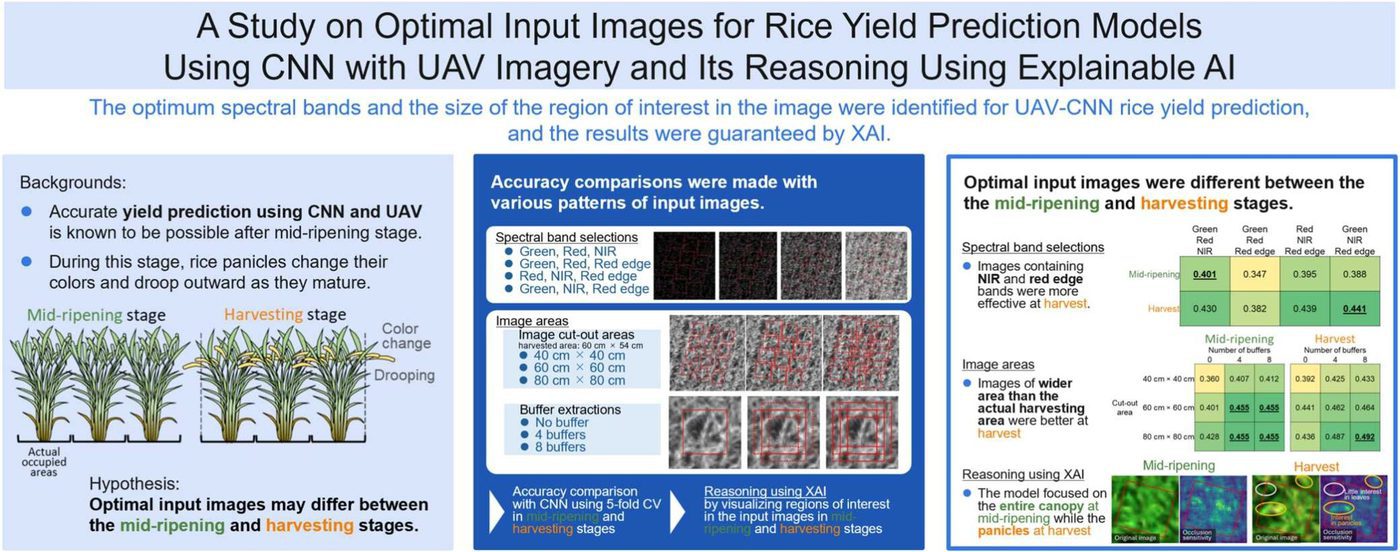
Summary figure of the best input images for yield prediction
Graphical abstract from Yamaguchi et al. (2025), CC BY-NC 4.0
2024 Computers and Electronics in Agriculture

A novel neural network model to achieve generality for diverse morphologies and crop science interpretability in rice biomass estimation

Yamaguchi T., Katsura K.

Proposed a new neural network model that estimates growth across rice varieties with very different shapes. It is also designed so that the results can be interpreted in crop science terms.
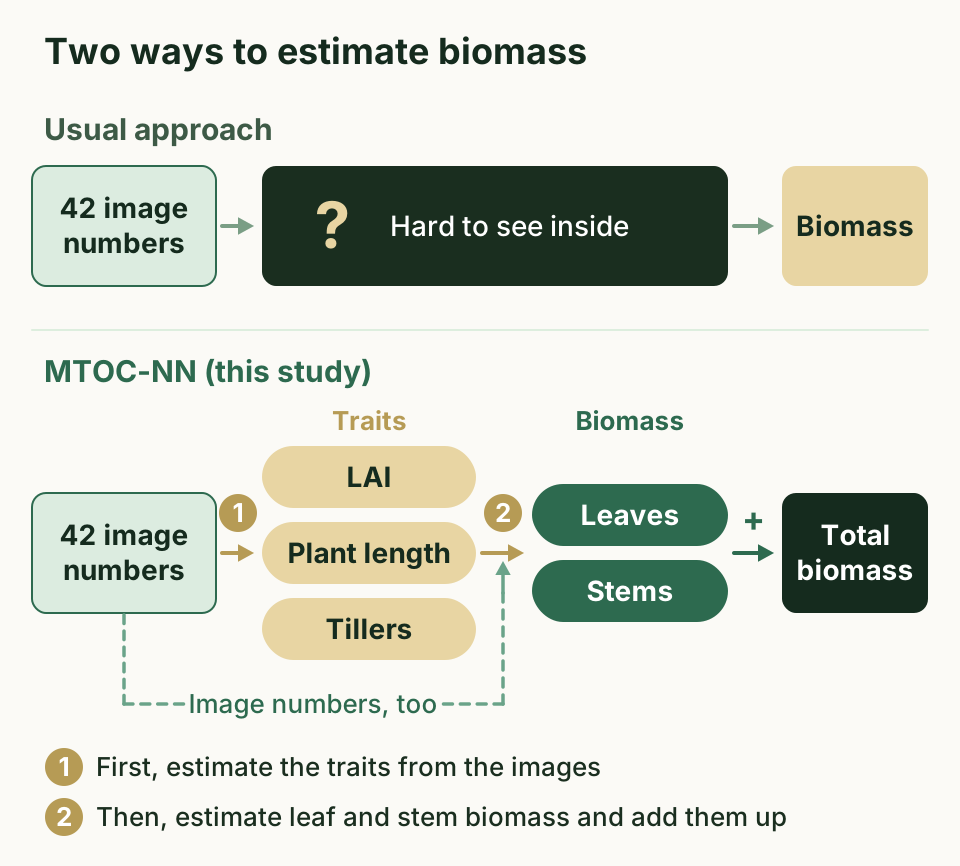
Diagram comparing the usual approach, which goes from image numbers straight to biomass, with MTOC-NN, which first estimates LAI, plant length, and tiller number and then leaf and stem biomass
How MTOC-NN works
2024 Plant Production Science

Improving efficiency of ground-truth data collection for UAV-based rice growth estimation models: investigating the effect of sampling size on model accuracy

Yamaguchi T., et al.

Examined how to collect ground-truth data (field measurements) efficiently for models that estimate rice growth from drone images.
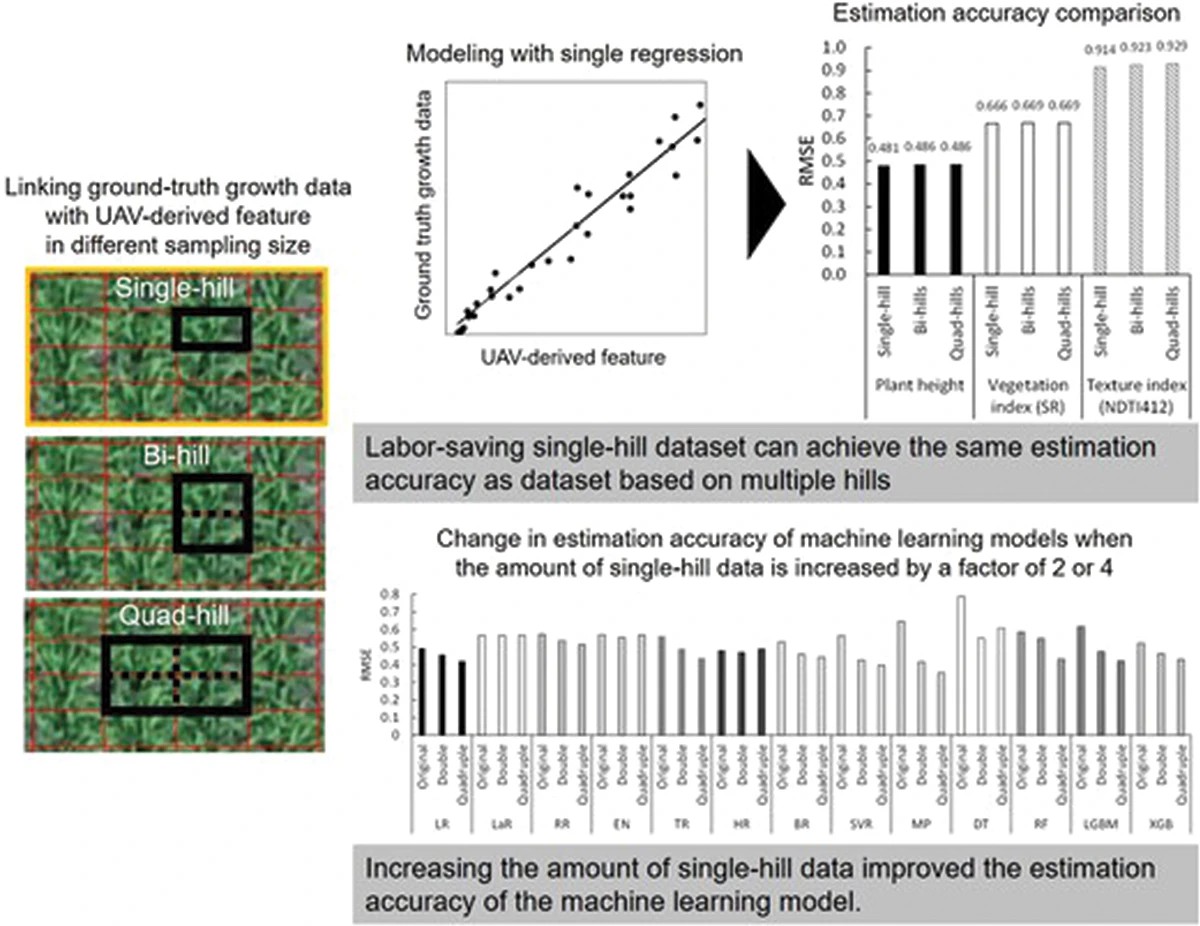
Graphical abstract showing that single-hill data matches the accuracy of multi-hill data, and that more single-hill data improves machine learning
Graphical abstract from Yamaguchi et al. (2024), CC BY-NC 4.0
2021 Remote Sensing

Feasibility of Combining Deep Learning and RGB Images Obtained by Unmanned Aerial Vehicle for Leaf Area Index Estimation in Rice

Yamaguchi T., et al.

Showed that deep learning combined with ordinary color (RGB) images from a drone can estimate leaf area index (LAI) accurately.
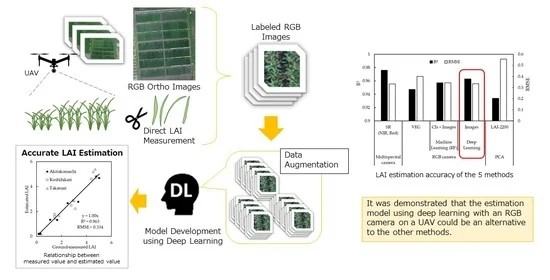
Graphical abstract of estimating leaf area index (LAI) with deep learning and drone RGB images, compared with other methods
Graphical abstract from Yamaguchi et al. (2021), CC BY 4.0
05

Awards

2026.03
Best Paper Award, The Crop Science Society of Japan

Improving efficiency of ground-truth data collection for UAV-based rice growth estimation models: investigating the effect of sampling size on model accuracy

The Crop Science Society of Japan
2025.09
Outstanding Oral Presentation Award, 260th Meeting of the Crop Science Society of Japan

Practical Feasibility of 3D Data of Individual Rice Plants Reconstructed from Smartphone-Captured Videos

The Crop Science Society of Japan
2020.09
10th Asian Crop Science Association Conference
Presentation Award (Poster)

Effect of Environmental Differences on Empirical Regression Models for Estimating Leaf Area Index Using Vegetation Indices in Rice

Asian Crop Science Association


07

Contact

Feel free to reach out.